
Fibre: The Gut Health Hero
You’ve probably heard a lot about fibre lately in the news and on social media, but what exactly is it and why is it important to our health?
Dietary fibre is a term used to describe a selection of carbohydrates that are found naturally in plants. Fibre differs to most other carbohydrates (such as sugars and most starches), in that it is not digested in the small intestine and therefore reaches the large intestine mostly intact. This means that fibre can help you feel fuller for longer and (alongside plenty of water) ensure regular bowel movements.

Fibre adds bulk to our stools by absorbing water making them softer and able to pass more easily. It is also associated with a reduced risk of developing obesity by helping food move more quickly through the gut - this is likely why fibre is linked to a reduced risk of developing bowel cancer.
There are various types of dietary fibre all with their own benefits, so it is important to eat a range of different of fibre-containing foods to ensure we get the full benefits!
Some types of fibre, such as beta-glucan (which can be found in oats) help to reduce our risk of diseases such as Type 2 Diabetes and Cardiovascular disease by reducing cholesterol and controlling blood sugar levels.
Other types of fibre have a ‘prebiotic’ effect. This means they are broken down as fuel by ‘good’ bacteria in our guts. There are a lot of studies indicating that ‘healthy’ gut bacteria may have several health benefits in terms of maintaining a healthy gut and reducing risk of diseases.
What are the recommendations?
The recommended intake of fibre is currently 30g per day for adults. Currently, only 4% of UK adults meet this dietary recommendation, with the average intake at 16g.
Daily recommendations are slightly lower for children separated by age group:
- 15g for ages 2-5
- 20g for ages 5-11
- 25g for ages 11-16
- 30g for ages 16+
In the UK, most of us do not consume enough fibre so it’s important to understand how we can get more fibre into our diets.
How can we get more fibre into our diet?
There are many ways you can increase fibre intake:
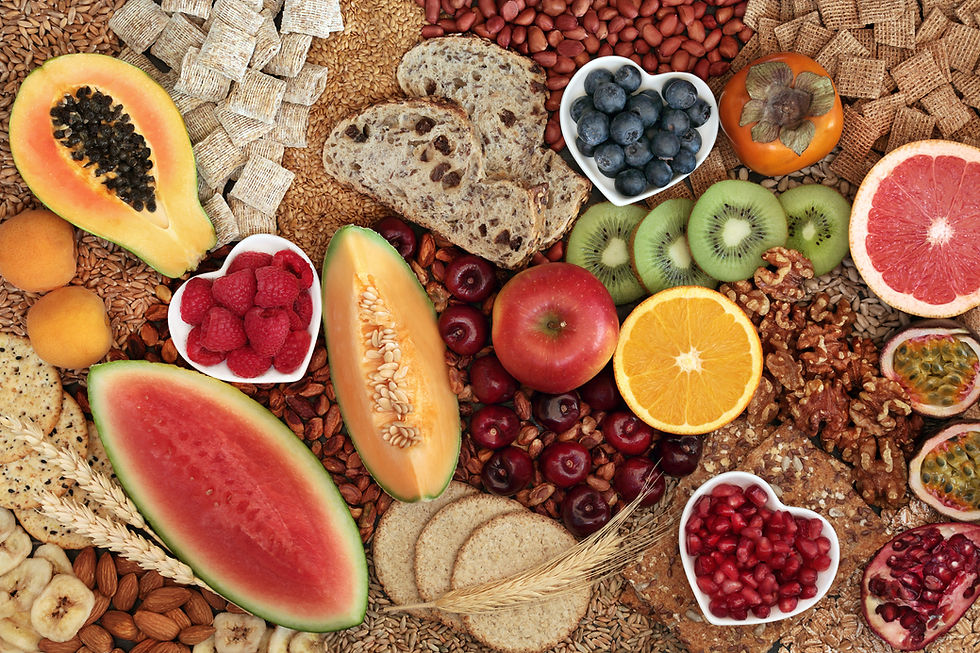
Aim to eat at least 5 portions of fruit and vegetables a day (increasing our fruit and veg consumption also has the added benefit of giving us other nutrients and vitamins we need to stay healthy too!)
Keep the skin on fruit and vegetables
Swap out white flour, bread, pasta or rice for wholegrain versions. You can also switch to 50:50 versions as a step towards increasing fibre intake.
If you are looking to swap to options higher in fibre, you can also check the nutrition label on the back of the pack to find out the fibre content per 100g of the food. You may also see ‘nutrition claims’ on the front of packaging such as ‘source of fibre’ or ‘high in fibre’. A food is a ‘source of’ fibre if it has at least 3g fibre per 100g, and ‘high in’ fibre if it has more than 6g per 100g.
It is also important to remember to drink a good amount of fluid if you plan to increase your fibre intake.
How do we include fibre in our menus?
As a provider of nutritious lunches, we have a significant opportunity to work on closing the gap between the recommended dietary intake and actual consumption of fibre by children. We work towards this is by including appealing higher fibre options in our menus. Some of the ways we do this include:
Adding recipes with lots of beans and pulses to our menus which are a great source of fibre and protein
Using 50/50 bread and pizza bases to increase fibre content whilst maintaining a familiar taste
We use wholemeal flour in our shortcrust pastry and baked dessert recipes
All our meals contain or are served with a variety of different vegetables
We offer fruit wedges as a dessert every day
We use pea protein as well as beef in our burgers and bolognese sauces, boosting the fibre content whist still being an excellent source of protein
HCL’s food and nutrition teams are constantly looking for new ways to include nutrients like fibre in our menus as we work to create and serve delicious food to feed growing minds.


Comments